In our new series, “In Conversation,” Aline Sun, Program Director in the Episcopal Church Foundation's Endowment Management Program, interviews Simona Mocuta, Chief Economist at State Street Global Advisors. They discuss the crucial role economists play in investment management, providing valuable perspectives on how economic trends impact investment strategies. This conversation offers key insights for those involved in endowment management and anyone interested in understanding the intersection of economics and investment strategy. Watch the full interview below.
Continue reading...

Year-End Giving is a wonderful opportunity to:
harvest the loyal generosity of established members of your faith community
build a stronger bond with those who are growing in commitment to your parish
inspire new gifts from those who are becoming acquainted with your ministry
Here’s a few ways you can make the most of this important season of provision in the annual life cycle of your congregation:
Continue reading...

“The way we’re trying to change the world is not going to work,” says Deborah Frieze, “and it’s never going to work.” That’s how she begins her 2015 TEDTalk, “How I became a localist”.
“You can’t fundamentally change big systems,” Frieze claims. “You can’t undo, fix, reverse engineer, redirect or reassign these systems. That’s because they’re not machines: they’re living systems.”
Continue reading...
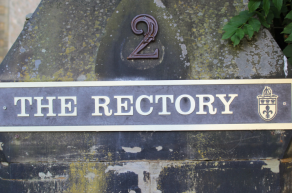
I am one of those clergy who live in a rectory, which might be a small number of us but not so tiny that it’s statistically uncommon. “Church-provided housing,” the official terminology for rectories or vicarages or deaneries or parsonages, can be a great blessing and can in some cases be an incentive for calling a pastor.
I’ve greatly enjoyed living in our rectory. Plus, I have a great Vestry and excellent Buildings & Grounds Committee (and wardens and B&G chairpersons) who work closely with me and my family to make sure the house is in tip-top shape. It’s both their house and our house at the same time, after all.
Continue reading...
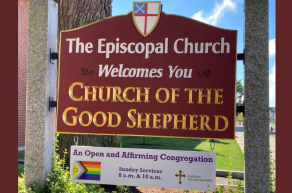
The journey to finding a spiritual home is a deeply personal one. For many, The Episcopal Church has become that place of refuge, growth, and community. Understanding how people discover our church can help us extend a more effective and heartfelt welcome. That’s why one of our Episcopal Pulse members suggested that the research team publish a survey on the diverse paths that lead individuals to our congregations.
From being raised in the faith to the influence of personal invites, and the active search for progressive and inclusive communities – the insights are telling. As we reflect on these findings, we recognize a few steps we can take to make our churches more discoverable and welcoming to all seekers.
Continue reading...

These days it seems like the leadership of every congregation thinks the answer to their dwindling or stagnant membership and attendance numbers is to attract young families: specifically, growing their congregations by bringing in families with young children. But is that really the answer? And if it is, how do we go about attracting them? Here are a few thoughts, based on research and experience.
Continue reading...

Summer has arrived and it's an ideal time to focus on endowment and financial management tasks. With fewer activities and events at church, summer provides an opportunity to review policies, educate committee members, and plan for the fall. To help you make the most of the summer, we’ve created a Summer Checklist for Your Church’s Endowment Management. This checklist will help your endowment, investment committee, and vestry make the most of the summer months.
Continue reading...

Communities are fluid. Think of the place where you grew up. Is it the same today as it was when you were a kid? Likely not. Neighborhoods and towns are always changing. So, too, are churches and faith communities.
Like anything fluid, then, the challenge – and opportunity – is to ride the wave. Growing communities will not always grow. Diminished congregations are not destined to remain so. Trends will shift. Sometimes we can be part of those changes; most of the time, the changes are so deep and seismic that we, even for our best intentions, just roll with ‘em.
Continue reading...

Every so often, I get an inquiry from a senior leader or search committee chair of a small congregation asking for tips on how to call a part-time rector. The reason given is often financial: the church is growing smaller and income is shrinking, part-time seems like the only possibility, and they want to know how to make it work. So I thought it might be helpful to consolidate the various ideas I’ve shared with them.
Don’t short-cut the process. Even if it seems obvious that you can’t afford a full-time rector, do not allow that to become the focal point of your search, leading you to decide what you will “settle for” before you explore the qualities your congregation needs in a rector. It may also hold you back from exploring creative options. Decide not to decide this until later in the process.
Continue reading...

What is a church if it’s not also a center for its community? Earlier in this series, I shared how Resurrection Parish (Church of the Ascension and St. George’s Church in St. Mary’s County, MD) started putting together the sometimes disparate concepts of community + church + center. And I followed up with an example of conceptual clarity around dilemma flipping – taking what some might see as a problem and flipping the script to find opportunities. Turns out that the leadership of Resurrection Parish was highly intrigued by Community + Center + Church, and so we’ve been on a journey in the last several years to create in downtown Lexington Park, MD the Park Community Foundation, which will reconfigure the entire mission focus of the Episcopal Church of the Ascension in that same town. What follows is a deeper dive into where we’re heading in St. Mary’s County, MD.
Continue reading...

Introduction
For decades, The Episcopal Diocese of Maryland has examined our history and wrestled with how we are called to repair the breach caused by slavery and racism. This post shares some insights into how our Diocese moved from research and learning to funding and action guided by our Baptismal Covenant, which calls us into becoming a beloved community of love.
Continue reading...

In part 1 of this series, I shared the back-story of how Resurrection Parish (Church of the Ascension and St. George’s Church in St. Mary’s County, MD) started putting together the sometimes disparate concepts of community + church + center. In this post, part 2 of 3, I want to share the conceptual clarity we strove to achieve as early as possible. What follows is a write-up a parishioner and I worked on in the Covid summer of 2020, and shared with our Vestry and other partners that fall. It’s essentially an exercise in ‘dilemma flipping’ – taking what some might see as a crisis or problem and flipping the script to find an opportunity or opportunities.
Continue reading...

Back in 2016, Church of the Ascension in Lexington Park, MD and St. George’s Church in Valley Lee, MD – the two campuses of what is now Resurrection Parish in the Episcopal Diocese of Washington – were entering into a covenantal, yoked relationship. Fearing uncertainty or some measure of loss, one member said to another: “I know the plan: Ascension will become a community center, whereas St. George’s will be the church.” (I’ll bet you can tell which worshipping community that person attended.)
There was no plan that went into that amount of detail. And if there were such detail, that was not on the plan – keeping one building a church and making the other a community center.
Continue reading...

This is the second installment in our two-part series on church branding. In the first post, "How Effective Branding Can Transform Your Church," we explored the importance of building a strong brand and how it plays a crucial role in fostering growth, enhancing community engagement, and inspiring gifts to your church's endowment. You can find that post here. Now that we've established the "why" of branding, let's delve into the "how." This post provides seven practical strategies for building your church's brand, helping you create a cohesive, welcoming, and memorable experience for both current and prospective members.
Continue reading...

There’s my bias. I believe The Episcopal Church has too many buildings. More than 6,000+ congregations and more than 100 dioceses scattered throughout the United States and other countries with churches, chapels, parish halls, parish houses, vicarages, rectories, other houses, diocesan centers, retreat houses, camps and conference centers, other real estate holdings and churchyards and stuff … the list goes on. It’s a lot.
Buildings consume a lot of attention and maintenance and money. We know that.
What’s more, we built a lot of our buildings in the height, or post-height of the Baby Boom – using the inexpensive building materials and processes that were in favor in the 1960s and 70s. Those materials and processes were then, and certainly are now, unsustainable both environmentally but also financially. Today, they pose ongoing challenges – health challenges and financial challenges. What else would you expect from scores of drafty, inexpensively built buildings with gas-guzzling HVAC systems?
Continue reading...
Church of the Ascension in Lexington Park, Maryland owned a house next door to the church. It was never the rectory. It was given to the church in 2000. For many years, Ascension rented it to a local transitional living shelter. The congregation, as landlords, managed and maintained the property as well as they could – but it wasn’t a well-built home in the first place, having been thrown up fairly inexpensively along with all the other homes in that post-WW2 neighborhood in the late 1940s. Having a constant turnover of residents as well as a shelter serving as tenant also posed ongoing challenges, but the church was serving the needs of the neighborhood. Sure, there were annual property tax payments and maintenance costs but, still, the $1,700 rent check each month was nice for the congregation’s cash flow.
Continue reading...

This year, the Episcopal Church Foundation (ECF) is celebrating its 75th Anniversary. We were founded by the Rt. Rev. Henry Knox Sherrill in 1949 as an independent, lay-led organization charged with “having great convictions about great things.” Bishop Sherrill served as Presiding Bishop during the post-war boom in The Episcopal Church and American society in general. Sherrill was clearly ahead of his time in creating an organization with a board of directors that was entirely lay, and we have continued that tradition and practice to this very day. A lay-led board is more than optics or window dressing, however. Lay empowerment has been part of ECF’s DNA since our inception.
Continue reading...

What is ABCD? Asset Based Community Development is a way of looking at the people and organizations in your particular community by acknowledging and highlighting their gifts, strengths, and relationships.
When you see the community around you through an asset-based lens, you see the God-given opportunities for connection, mission, and relationship that can be overlooked by focusing on the deficits.
A critical step in ABCD is building an asset map of your surrounding community. Taking a deep look at the different kinds of people, organizations, and physical spaces in your neighborhood will help you identify potential mission fields or ministry partners.
Continue reading...

When you think of Coca-Cola, McDonald’s, or Nike, what images, emotions, and even tastes come to mind? Perhaps it's the unmistakable shape of a Coke bottle, the silhouette of the golden arches, or the iconic "Just Do It" slogan from Nike. These companies have mastered the art of branding, transforming their logos and names into memorable symbols of their products and values. But branding isn't just for corporations. It's equally important for institutions with deeper, more personal missions—like churches. Faith communities are vying for attention and relevance in the lives of their congregants and their broader communities, and understanding and honing your church's brand is key. Just as a strong brand can evoke trust and loyalty among consumers, a well-defined and communicated church brand can foster a deeper connection with current members, attract new ones, and extend your reach and impact within your community.
Continue reading...

 RSS Feed