Please login.
August 8, 2024
Rules for Rectories
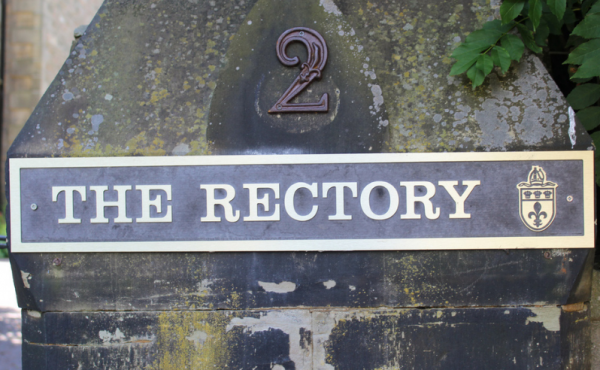
I am one of those clergy who live in a rectory, which might be a small number of us but not so tiny that it’s statistically uncommon. “Church-provided housing,” the official terminology for rectories or vicarages or deaneries or parsonages, can be a great blessing and can in some cases be an incentive for calling a pastor.
I’ve greatly enjoyed living in our rectory. Plus, I have a great Vestry and excellent Buildings & Grounds Committee (and wardens and B&G chairpersons) who work closely with me and my family to make sure the house is in tip-top shape. It’s both their house and our house at the same time, after all.
But I’ve also had to come by these learnings honestly, and not without some heavy lifting on my part. Years ago, for instance, while most everyone seemed to agree that it was time our rectory got a new kitchen, there was obvious, at first subtle disagreement on just what that meant – a new coat of paint? A few new appliances? Or full-scale renovation? Anyone who’s ever renovated a kitchen in a 1965 house knows that you’re likely going to be talking about removing walls and doing a comprehensive re-think, including removing or relocating walls in adjoining rooms and the costs that those additional projects incur.
So, yes, rectories can sometimes be a source of confusion and, when that happens, strained relationships between clergyperson and congregation. I’ve found that leaning into these harder conversations opens up a lot of respect and mutual sharing on the part of both clergyperson and congregation. And so, as an offering to the wider church, I thought it’d be good to publish my running list of ‘Rules for Rectories.’ I’m sure there are more than these ten, so I also hope this post will stimulate good ongoing conversations.
1. The house is the clergyperson’s. So long as the clergyperson holds the office of rector or vicar, interim or priest-in-charge (or whatever the pastoral post is called), the house is in possession of the clergyperson and her/his family. No parish functions should be organized or hosted at the house unless the clergyperson is willing and, in fact, unless the clergyperson initiates such an offering. Even though my rectory is visible from the rest of the church campus, my congregation has historically honored that it’s my family’s house – and they generally don’t ‘pop’ over. But I’ve also heard horror stories from others about this-or-that church leader who let himself into someone’s rectory, or church functions being planned without first consulting the priest. Long, long ago (and way before my time) my parish’s then-Warden refused to allow the rector’s wife to paint their son’s nursery a certain color! That’s way beyond the pale.
2. Making sure it is a livable dwelling is the church’s responsibility. The congregation must maintain the house in good condition, and make sure that all appliances, mechanical systems, and fixtures are in good working order. Most of the time it’s incumbent on the clergyperson (and/or a member of the clergyperson’s family) to report a house repair to some identified leader. Sometimes it’s an emergency repair. I’ve had my fair share of flooding basements and non-functioning boilers. There should be a system in place in which repairs, especially urgent repairs, get addressed and fixed in a timely manner. I knew a rector once who worked with his parish leadership to determine a certain time period in which someone would respond and fix something that was broken. If they didn’t respond in time, it was agreed that the rector would call the contractor or repair-person and pass along the bill / invoice to the Vestry.
3. Who pays for the cost of utilities? Some congregations transfer utility bills to the clergyperson; others do not. In some cases and in some jurisdictions, especially if the house is literally connected to the church or on the same electrical meter, it’s simply not feasible to transfer utility bills from the name of the church. I have not seen widespread agreement on which policy is best. This is one of those areas where clergyperson and congregation need to come to a common understanding about what is best for all parties. Utilities include obvious ones such as electricity and, in some areas, water; also, HVAC costs related to heating / cooling, oil or gas or geothermal. Phone service is a utility, too, not only cell service (reimbursement of at least a portion of which should be part of a clergyperson’s Letter of Agreement) but landlines. Not every house is in an area with top-notch cell service. Plus, these days internet service is a utility (not a luxury). We used to talk about cable TV service, but increasingly that’s all bound up in internet service.
4. Regular maintenance is the responsibility of the congregation, working together with the clergyperson. The Vestry and its Buildings & Grounds Committee should have a detailed periodic checklist for all systems and needs of the house – just like anyone has with their own property. When was the last time the roof was replaced? The HVAC systems? When did we last have the chimney cleaned? What are the regular cleaning, maintenance routines on operating systems such as HVAC systems? When was the house and exterior trim last painted? This includes all aspects of the house, including detailed attention to those potential liabilities that occur due to deferred maintenance.
5. Not only should the congregation make sure it’s a livable dwelling, the parish should make sure it is an excellent home – on par with those things individual church leaders provide for themselves in their own homes. At least once-every-five-years is a good mark for congregations to plan with the clergyperson and execute some specific capital improvement opportunity or opportunities. Seems to me that a lot of rectories were built in the rapid ‘building years’ of the 1960s and 70s, so it’s always time for a re-think and renovation of kitchens, open concept main living spaces, bathrooms, closets, outdoor patios and outdoor areas, and garage doors. Domestic life has changed a lot since the Baby Boom years, and church-provided housing should reflect those changes, too. Obviously, capital improvement projects also include less glamorous (but nevertheless critical) areas such as sewage / septic, roofs, HVAC systems, windows, doors, security systems and stoops, railings and steps.
6. There are specific tax reporting rules for clergy who live in rectories. This is from the Clergy Tax Preparation Guide (2023): “Clergy who live ‘rent-free’ in church-provided housing should have a portion of their cash compensation designated by the vestry or other church governing body as a parsonage or rectory allowance for expenses they pay, such as utilities, repairs, and furnishings. This exclusion works like the housing allowance for clergy who own or rent their homes. The portion of the fair rental value test that applies is the portion not provided by the church. Therefore, if the church provides the house and pays the utilities, the value added for furnishings is the only relevant amount to be used in determining the amount eligible for this allowance. Note: Clergy who live ‘rent-free’ in church-provided housing that is provided as compensation for ministerial services do not include the annual fair rental value of church-provided housing as income in computing federal income taxes and therefore do not pay federal income tax on that value. The annual fair rental value is not ‘deducted’ from the clergy’s income as housing allowance, nor is it reported as additional taxable compensation on Form W-2. However, clergy do pay the Self Employment Contributions Act (SECA) tax on the fair rental value of the housing provided. Note: Clergy who live ‘rent-free’ in church-provided housing will not be allowed to claim a housing allowance for any other real property that they own or rent while living ‘rent-free’ in church-provided housing. This is because the ‘rent-free’ church-provided housing will be considered their primary residence for tax purposes.”
7. Determining the parish’s pension payment for a clergyperson who lives in church-provided housing is different from those who own (or rent) their own homes. This is from the Church Pension Group’s website: The “Total Assessable Compensation” (TAC) is 18% of the following annualized amounts –
- base salary (excluding housing) and scheduled taxable cash payments;
- cash housing allowance and / or utilities;
- employer contributions to a qualified and/or non-qualified plan;
- one-time payments (applies to month when paid);
- the value of employer-provided housing, plus utilities, which equals 30% of the sum of the four bullets above. (However, if the sum of the four bullets above is less than the Hypothetical Minimum Compensation [an amount established by the Church Pension Plan to determine TAC in certain cases, currently set at $18,000 per year or $1,500/month as of Jan. 1, 2018], the value of employer-provided housing equals 30% of the Hypothetical Minimum Compensation.)
- Note: if the only type of compensation that your employer provides is housing, then your TAC equals 30% of the Hypothetical Minimum Compensation.
8. The clergyperson is responsible for personal property and personal property insurance. I’ve heard of congregations giving an allowance for furniture or furnishings; those are exceptions (and exceptional gifts) but not expectations. For tax purposes, a clergyperson can declare as a housing allowance a reasonable portion of her/his cash stipend – but only when it’s used to purchase certain household furnishings, services and insurance owned by the cleric and family. That clergyperson needs to document those expenses for the purposes of the IRS, albeit not the Vestry who will pass such a housing allowance resolution in advance of the year in question.
9. Oh, and I never thought I’d need to write this but if the congregation’s clergyperson is living in that congregation’s church-provided housing the clergyperson does not need to, nor should be expected to pay rent. True story: it has happened and shouldn’t be allowed or expected.
10. For those congregations that own church-provided housing, it is nevertheless the clergyperson’s choice whether (or not) to live in that house. It is not a requirement of any given call, even as it can be an asset. If the congregation rents out the house for additional income, not only is that income taxable to the congregation but, in most cases, the additional income is directly added to the rector’s compensation – as in, her/his real costs of housing on the market.
Rectories and Deaneries or Vicarages say a lot about the congregation and what they value. Years ago, I interviewed at a church that had on its sprawling campus two houses for Curates and a large Georgian rectory – the latter replete with nine bedrooms (now that says a lot about the value of raising up a family)! And a friend shared with me a profile for a Deanery that came with a furnished au pair apartment, which obviously attracts a certain caste of priests (including those who can spell “au pair”). As such, these houses are fairly indispensable to the assets of the church, even though living in them and working with them are infrequently addressed throughout the church.
Does your congregation have a rectory? How do you and your congregational leadership treat that house? Do you live in a rectory or deanery (or did you once upon a time) and, if so, what has been your experience?
-

Related Post
Park Community Foundation In this third and last blog post in the series, the Rev. Greg Syler discusses plans for the future o… -

Related Post
Flip the Script In the second post of a three-part blog series, the Rev. Greg Syler continues the story of Resurrect… -

Related Tool
Online Learning from ECF Explore free, online courses from ECF.
 RSS Feed
-

Related Post
Wicked Problems -

Related Post
Types of Churches -

Related Post
Think You Want to Call a Part-Time Rector? Read this first.